













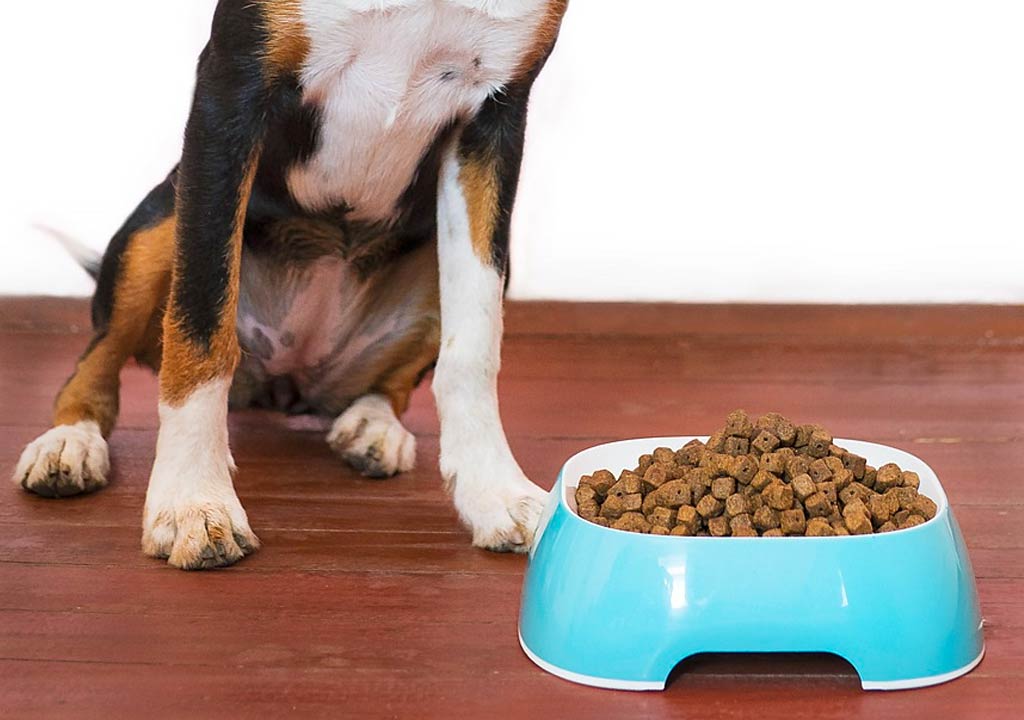
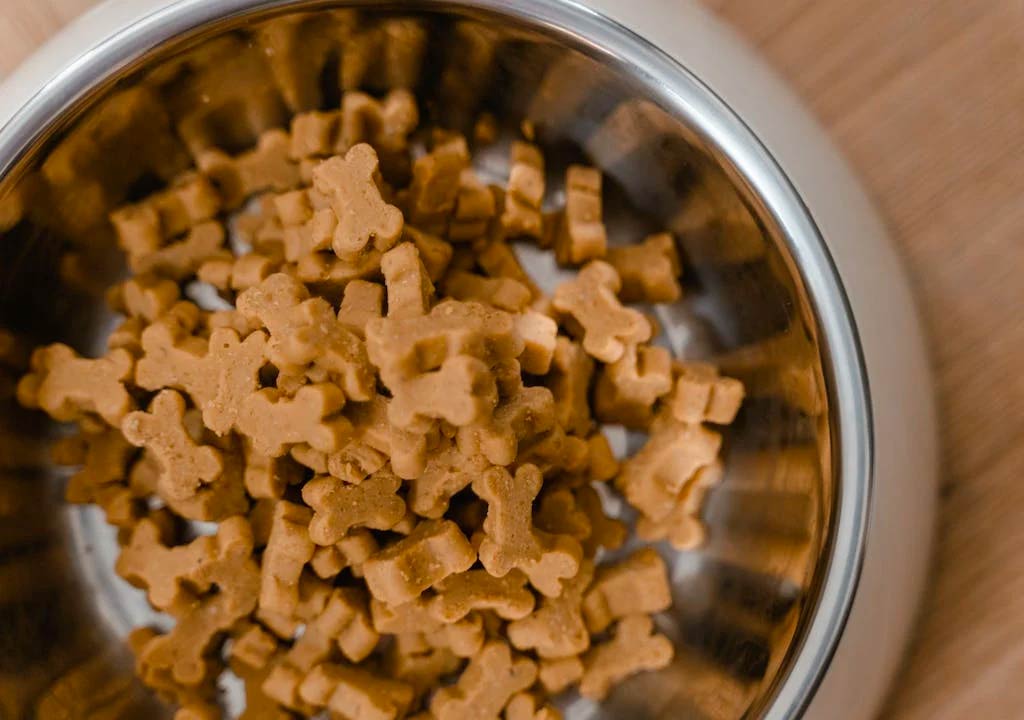
Portion Control and Meal Timing: A Practical Guide for Dog Nutrition

Portion Control 101: How Much to Feed Your Dog and Why It Matters
Feeding time is more than just filling a bowl and hoping your dog is satisfied. Proper portion control is a foundational part of canine health, energy, and happiness. When done right, it helps your dog maintain a healthy weight, supports vitality, and reduces the risk of obesity-related conditions. When done poorly, even a seemingly small misstep can add up over time, leading to weight gain, decreased activity, or health issues that require veterinary care. This guide walks you through the hows, whys, and practical steps of portion control so you can feed your dog confidently and consistently.
Why portion control matters
Dogs, just like people, have varying energy needs. Some are energetic athletes who burn calories quickly, while others are couch companions whose activity level is modest. The key is to align how much you feed with how many calories your dog truly needs on a daily basis. Here's why portion control matters:
- Weight management: Obesity is common in dogs and can shorten life expectancy, raise the risk of diabetes, joint problems, cardiovascular issues, and reduce quality of life. Accurate portions help prevent gradual weight creep.
- Energy and mood: Feeding too little can leave a dog lethargic or irritable; overfeeding can cause lethargy after meals and decreased activity due to discomfort. Balanced portions help maintain steady energy and mobility.
- Digestive health: Consistent portions reduce the likelihood of GI upset, regurgitation, or sudden changes in stool consistency that can occur when meals are irregular or portions are inconsistent.
- Cost and convenience: Measuring portions helps you use food efficiently, avoid waste, and plan treats and meals without guessing.
Understanding your dog's energy needs
Every dog has a unique caloric requirement influenced by several factors. The most practical way to start is to estimate daily energy needs and then translate that into food portions. A common way to estimate energy needs for maintenance is by using a dog's Resting Energy Requirement (RER) and then applying a multiplier to reflect activity level and life stage.
Basic formulas (for educational purposes):
RER ≈ 70 × (body weight in kg)0.75
Daily energy needs (for maintenance) ≈ RER × activity/life-stage multiplier
Important notes:
- The exact multipliers vary. Typical ranges are approximately 1.6-2.4 for many adult dogs with average activity, higher for very active dogs and lower for senior or less active dogs. Spayed/neutered dogs may need slightly fewer calories than intact dogs of the same weight and activity level.
- Use these as starting points, not precise prescriptions. It's best to consult your veterinarian or use the dog food brand's feeding guidelines paired with your dog's body condition score.
To put it into perspective, consider a few example weights and how the math translates into daily calories:
- A 5 kg small-breed dog with moderate activity might need roughly 180-250 kcal per day, depending on the specifics of activity and health.
- A 15 kg middle-weight dog with steady activity could require around 600-900 kcal per day.
- A 30 kg larger dog with regular exercise might be in the 1100-1500 kcal per day range.
Remember: these are ballpark figures. The actual needs depend on your dog's body condition, age, metabolism, and health status. The best practice is to start with the brand's feeding guidelines and adjust based on results over several weeks.
How to determine the right amount to feed
Getting to the right portion is a three-step process: determine target daily calories, read your dog food label, and convert calories into daily portions divided into meals. Here's how to do it in a practical, repeatable way.
Step 1: determine target daily calories
Use your dog's weight and activity level to pick a multiplier range. If you're unsure, start with the middle of the recommended range on the brand's feeding chart and adjust after a couple of weeks based on weight changes and energy.
Tip: If your dog's veterinarian has identified a specific target body weight or energy goal, use that as the anchor. Weight changes should be gradual-about 1-2% of body weight per week for a healthy dog is a reasonable pace to aim for when adjusting calories.
Step 2: read the dog food label for calories per unit
Most dry kibble and many canned foods list calories per cup or per can. Make note of the calories per cup (or per can) and the recommended daily servings on the package. Some brands also provide a feeding chart based on weight. If you're using a combination of foods or treats, track those calories separately to keep your total within the target range.
Example label reading:
- Kibble: 360 kcal per cup; recommended 2 cups per day for a 20 kg dog with moderate activity.
- Canned: 120 kcal per can; recommended 1.5 cans per day along with kibble.
Step 3: convert calories to daily portions and split into meals
Divide the daily calories by the calories per unit of food to determine total daily portions, then split into meals. For most dogs, two meals per day (morning and evening) work well, though some dogs do better with three smaller meals or a single feeding if that aligns with their routine and digestion.
Worked example:
- Dog weight: 20 kg
- Estimated daily needs: 850 kcal (using a reasonable maintenance multiplier for a moderately active adult)
- Kibble provides 350 kcal per cup
- Daily cups needed: 850 ÷ 350 ≈ 2.43 cups per day
- Split into two meals: ~1.2 cups in the morning and ~1.2 cups in the evening
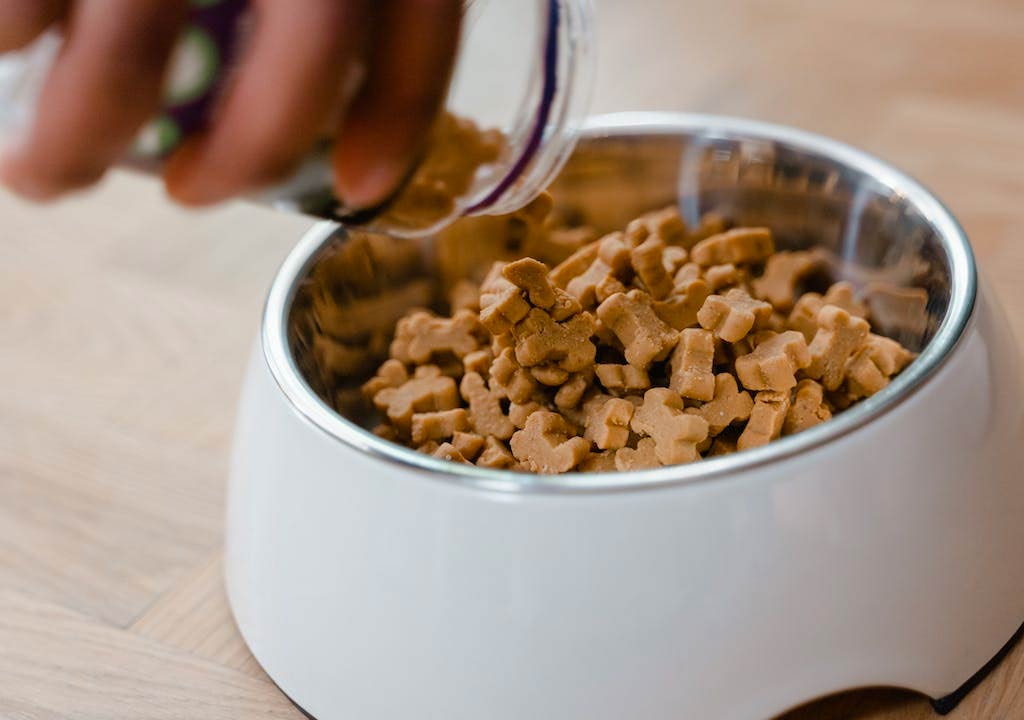
Always use a proper measuring cup to deliver the portion. Visual estimates and "eyeballing" can easily lead to under- or over-feeding, especially when brands have different calorie densities.
Practical tips for consistent portions
Consistency is the friend of healthy weight management. Here are practical tips to make portion control easier and more reliable:
- Use a dedicated measuring cup: Mark your cup with the exact portion in cups or milliliters, and keep it with the dog food bag.
- Feed at the same times daily: A predictable schedule helps regulate appetite and energy and reduces begging behavior.
- Weigh your dog regularly: Use a scale or a reliable home scale to monitor weight every 2-4 weeks. Small changes can indicate whether you need to adjust portions.
- Adjust gradually: If you need to change portions, do so in small increments (about 5-10% of daily calories) over 1-2 weeks to minimize GI upset.
- Keep treats in check: Treats should be counted within the daily calorie budget. Prefer low-calorie options and limit to a reasonable percentage of daily calories.
Treats and extras: how to count them
Treats are often the most overlooked source of extra calories. It's easy to think a 10-minute cuddle with a biscuit isn't a lot, but those calories add up over time. A practical approach:
- Establish a treat budget in calories per day (for example, 5-10% of daily calories).
- Offer treats that are lower in calories or use healthy, dog-safe alternatives like tiny pieces of carrot or apple (without seeds or cores).
- Consider treating within meals when possible to maintain appetite and digestion stability.
- When using rewards during training, account for the calories in those rewards and adjust meals accordingly.
Many dog foods and treat labels provide calorie information for the actual product. If you're unsure about a treat's calories, check the packaging or ask your veterinarian. There are also smartphone apps that can help track daily intake, including food, treats, and supplements.
Transitioning to a new food or adjusting portions
There are legitimate reasons to switch foods-new formulation, different brand, improved palatability, or a veterinary recommendation. When changing foods, do so gradually to minimize GI upset and food refusals. A common transition plan:
- Days 1-3: 75% current food, 25% new food
- Days 4-6: 50% current food, 50% new food
- Days 7-9: 25% current food, 75% new food
- Day 10 onward: 100% new food
If you need to adjust portions after a change (e.g., if the dog seems hungrier or less satisfied), monitor weight and behavior over the next couple of weeks and adjust by small increments as needed.
Puppies, adults, and seniors: different guidelines
Life stage dramatically alters caloric needs. Puppies require more calories per pound of body weight to support rapid growth and development, while seniors may require fewer calories due to lower activity levels and slower metabolism. Food formulated for each life stage often provides an appropriate guidance chart, but always follow your veterinarian's advice for growing puppies or dogs with special health considerations.
Puppies:
- Typically need more calories per day than adults of the same weight because their bodies are growing and developing.
- Older puppies may need to switch to a food formulated for growth but with appropriate calcium and phosphorus levels to support bone development.
- Feeding frequency is often 3-4 meals per day for small breed puppies and 2-3 meals for medium-to-large breeds during growth spurts.
Adults:
- Most adult dogs thrive on two meals per day, but some do well with a single daily meal depending on their routine and appetite.
- Monitor weight and body condition, adjusting portions if the dog starts to gain or lose weight unexpectedly.
Seniors:
- Senior dogs may require fewer calories (less activity, slower metabolism) but still need high-quality protein to preserve lean body mass and joint support.
- Discuss movement-based adjustments with a veterinarian if arthritis or mobility issues are present; some senior diets include joint-supporting supplements and enhanced fiber for digestion.
Common mistakes to avoid
Despite good intentions, several common missteps can undermine portion control. Here are the big ones and how to dodge them:
- Over-reliance on "cup" measurements: Kibble density varies by brand. Use the actual calories per cup from the label, not a guessed volume.
- Inconsistent feeding times: Irregular schedules can trigger overeating or begging and disrupt digestion.
- Ignoring treats: Treats can add a surprising number of calories if not accounted for in the daily budget.
- Sudden diet changes: Quick switches can cause GI upset. Transition slowly, especially when altering protein sources or fiber content.
- Not adjusting for activity: A more active dog needs more calories; sedentary dogs need fewer. Reassess after changes in routine or weather.
- Neglecting weight checks: Without regular weighing, it's easy to drift toward overweight or underweight without noticing changes in body condition.
Reading food labels: calories, density, and feeding charts
Understanding the label on your dog's food is essential. Here are the key elements to look for:
- Calories per cup or per can: This tells you how energy-dense the food is. It may read as kcal per cup or kcal per can.
- Recommended daily amount: A chart on the bag suggests how many cups (or cans) to feed based on weight. Use this as a starting point, then adjust based on your dog's weight trend.
- Guaranteed analysis: This includes protein, fat, fiber, and moisture. While not a direct guide to portions, it helps you assess the food's quality and suitability for your dog's needs.
- Ingredient list and "calorie density": Some foods have higher protein and lower filler content, which can influence satiety. A higher-density food often means you feed less by volume to achieve the same calories.
Tip: If you feed more than one brand or mix a home-cooked component with commercial food, you'll need to calculate the total daily calories from all sources to avoid overfeeding.
Two practical example scenarios
Example 1: A moderately active 20 kg dog using dry kibble with 340 kcal per cup. The owner estimates maintenance needs around 1.8 × RER (a common middle-of-the-road multiplier). If RER is about 20 kg dog's RER ≈ 70 × (20)^0.75 ≈ 70 × 9.46 ≈ 662 kcal/day. Daily needs ≈ 662 × 1.8 ≈ 1190 kcal/day. Cups per day ≈ 1190 ÷ 340 ≈ 3.5 cups. Feed 1.75 cups in the morning and 1.75 cups in the evening.
Example 2: A senior, less active 12 kg dog on canned food with 150 kcal per can. If the dog's target is 900 kcal/day (typical for some small to medium senior dogs with modest activity), then daily cans ≈ 900 ÷ 150 = 6 cans per day, split into two or three meals. Monitor weight and adjust as needed, especially if your dog has dental issues or a preference for softer foods.
These scenarios illustrate how daily calories, calorie density, and portion size interact. Use your dog's weight, activity, and the food you choose to tailor portions to your pet's needs.
Common signs your portions are off
Learning to interpret your dog's body condition and appetite helps you detect overfeeding or underfeeding early. Watch for:
- Weight changes: Steady gain or loss over a few weeks indicates portions may need adjustment.
- Rib visibility: You should be able to feel your dog's ribs under a light layer of fat; if you can't feel them, they may be overweight. If ribs are easily visible with little fat, they could be underweight.
- Energy level: Unusually sluggishness or hyperactivity may reflect too little or too much food, respectively.
- Appetite patterns: A sudden change in appetite (e.g., begging more than usual or refusing meals) can signal a need to reassess portions, health, or food type.
How to adjust portions safely
Adjustments should be gradual to protect your dog's digestion and overall well-being. A practical approach:
- Make changes in small increments of 5-10% of daily calories every 1-2 weeks, while monitoring weight and body condition.
- For weight loss: aim for a slow, steady rate (roughly 1-2% of body weight per week), with checks every 2-4 weeks.
- For weight gain or maintenance: adjust slightly based on appetite and energy levels; don't overfeed to "make up" for perceived treats or hunger.
Special considerations: medical conditions and lifestyle
Some dogs have conditions that influence portioning, including:
- Arthritis or mobility issues: Maintaining a healthy weight reduces joint stress. In some cases, a veterinarian may recommend a specially formulated weight-management or joint-support diet.
- Gastrointestinal sensitivities: Some dogs tolerate certain fiber levels or protein sources better than others. A vet can help tailor portions when GI symptoms are present.
- High-energy or working dogs: Working dogs may require significantly more calories due to activity; plan for endurance and recovery needs, and adjust as activity fluctuates.
Always consult a veterinarian if you notice sudden changes in appetite, weight trends, or signs of illness. A tailored plan is best when health conditions are involved.
Creating a simple, repeatable routine you can trust
Portion control works best when it becomes a reliable daily routine. Here's a blueprint you can adapt:
- Choose a consistent feeding schedule (two meals per day is common for many dogs).
- Use a precise measuring tool and a labeling system to track portions and calories.
- Keep a simple log of daily food intake, weight changes, and any treats. Review the log monthly to spot trends.
- Adjust gradually in small increments, and re-check your dog's weight and body condition every 2-4 weeks.
- Consult your veterinarian if you notice persistent weight changes or if you're considering a brand switch or a major diet change.
Healthy eating habits: more than just portions
Portion control is a cornerstone of a holistic approach to canine nutrition. Pair portions with other healthy habits to maximize wellbeing:
- Offer high-quality foods appropriate for your dog's life stage and health status.
- Provide fresh water at all times.
- Limit high-calorie "extras" and avoid table scraps or human foods that may cause digestive upset or toxicity.
- Encourage regular physical activity appropriate for age, breed, and health status.
- Schedule regular veterinary checkups to monitor weight, body condition, and overall health.
Frequently asked questions
Here are answers to common questions about portion control for dogs:
- Can I free-feed my dog? Free-feeding (leaving food out all day) can lead to overeating, especially in dogs prone to weight gain. A scheduled feeding routine is generally recommended for consistent calorie intake and digestion. Some dogs with very specific metabolism or medical needs might be managed differently under veterinary guidance.
- How do I transition my dog to a lower-calorie food? Begin with a gradual mix similar to the standard transition approach (75/25, then 50/50, etc.) while monitoring weight and appetite. If the dog is not satisfied, a brief consultation with a veterinarian or nutritionist can provide options (e.g., a different protein source, higher fiber content, or a suitable weight-management formula).
- What about prescription diets? Prescription weight-management diets exist and should be used under veterinary supervision. They are designed to balance calories, nutrients, and satiety in a way that supports weight loss while preserving muscle mass.
- Is it okay to give human foods as treats? Some human foods are safe in small amounts (e.g., carrots, green beans, plain yogurt in moderation). Others are toxic (grapes, onions, chocolate, xylitol, etc.). When in doubt, consult your veterinarian before sharing human foods.
Putting it all together: your action plan
Ready to implement Portion Control 101 in your home? Here's a concise action plan you can start today:
- Determine your dog's approximate daily calorie target using weight, activity, and life stage. Use a range and start in the middle.
- Identify the calories per unit of your dog's current food (per cup or can) and read the recommended daily amount on the label.
- Calculate daily portions and split into two meals (or another schedule that fits your dog and lifestyle).
- Use a measuring cup and keep a simple tracking log for two to four weeks. Record weight, body condition, and appetite.
- Adjust gradually by 5-10% of daily calories every 1-2 weeks based on the dog's weight trend and energy level.
- Minimize treats or account for them within the daily budget. Choose low-calorie, nutritious options when possible.
- Consult your veterinarian if you notice persistent weight changes, GI issues, or if you plan a major diet change.
Conclusion
Portion control is more than a numeric target; it's a practical, compassionate approach to helping your dog live a longer, healthier, happier life. By understanding your dog's energy needs, reading food labels carefully, measuring accurately, and monitoring weight over time, you can create a feeding plan that supports your dog's well-being without guesswork or inconsistency. Remember, every dog is unique, so what works for one might require a few tweaks for another. The most important steps are to start with a solid estimate, measure meticulously, and adjust gradually while staying in close touch with your veterinarian. A well-managed diet is a gift you give your dog: steady energy, comfortable joints, a wagging tail, and a bright, engaged life.
Would you like help estimating your dog's daily calories based on their weight and activity level? Share a few details about your dog (weight, age, activity level, and any health concerns), and I can walk you through a personalized calculation and a starter feeding plan.
LIKED THIS ARTICLE? SHARE IT: